

Thermal cameras security is defined as the use of infrared sensors to detect heat signatures emitted by people, vehicles, and equipment, enabling surveillance that works independently of visible light. Unlike standard CCTV, these systems read temperature differences rather than reflected light, which means darkness, fog, and smoke do not degrade performance. For security professionals and business owners in Ontario, that distinction changes the math on perimeter protection entirely. The technology is no longer reserved for military or government use. Commercial deployments across manufacturing, warehousing, and critical infrastructure have made thermal imaging a practical, cost-justified layer in any serious surveillance program.
How do thermal cameras work differently from standard security cameras?
Thermal cameras detect infrared radiation, the heat energy every object emits based on its temperature. A standard visible-light camera needs photons bouncing off a surface. A thermal camera needs none of that. It reads the heat the subject itself produces, then renders a grayscale or color-mapped image based on temperature differences.
This distinction matters in three specific ways:
- Detection range. Thermal cameras detect humans at 200–500 meters, compared to roughly 50 meters for a standard visible-light camera. That is a 4x to 10x range advantage on a single unit.
- Environmental independence. Thermal cameras perform in total darkness, fog, smoke, and light rain, conditions that render visible-light cameras unreliable.
- False alarm resistance. Because the system reads heat rather than pixel movement, swaying branches, passing headlights, and shifting shadows do not trigger alerts.
Thermal sensitivity, measured in millikelvin (mK), determines how small a temperature difference the sensor can resolve. Lower mK values below 35mK allow the camera to distinguish a person from a warm background with far greater reliability. This metric matters more than resolution when the goal is detection rather than identification.
Pro Tip: When evaluating thermal cameras, ask the vendor for the mK rating before the megapixel count. A camera with a lower mK value will outperform a higher-resolution unit in real-world detection scenarios every time.
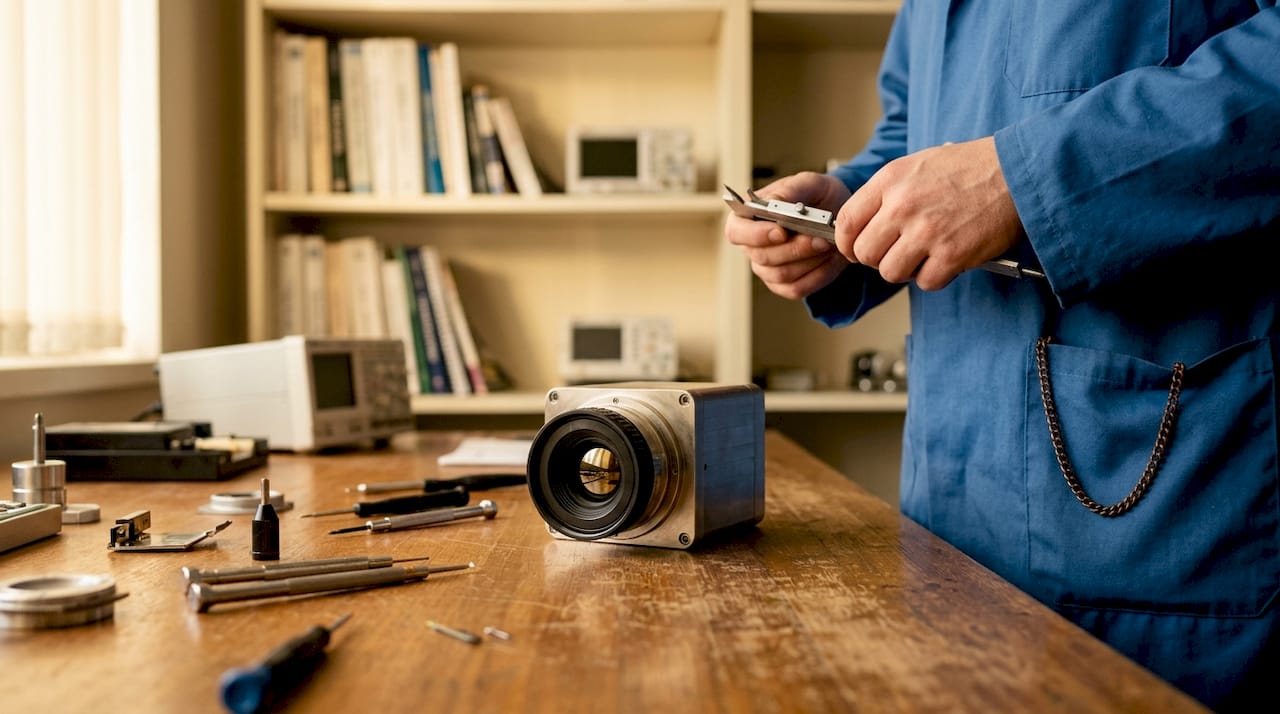
One hard limitation: thermal cameras cannot see through glass. They read the heat reflection off the glass surface, not what is behind it. Proper mounting with a clear, unobstructed line of sight is non-negotiable.
What are the key benefits of thermal cameras for commercial security?
The business case for heat vision cameras rests on three measurable advantages: range, reliability, and reduced operational cost.
- Extended perimeter coverage. One thermal unit can cover ground that would require multiple visible-light cameras. For large industrial sites, warehouses, and construction yards across Ontario, that translates directly into fewer units, fewer cable runs, and lower installation costs.
- Dramatic false alarm reduction. Thermal cameras reduce false alarms by detecting heat signatures rather than motion or pixel changes. Fewer false alarms mean fewer unnecessary guard dispatches and lower monitoring costs over time.
- 24/7 operation without external lighting. Standard night vision security cameras require infrared illuminators or ambient light. Thermal units need neither. That eliminates the cost of lighting infrastructure and removes the visual signature that tells intruders a camera is present.
- Long-term cost efficiency. Long-term savings from thermal cameras come from reduced false alarm dispatches and fewer units needed to cover the same perimeter. The upfront cost is higher, but the total cost of ownership over a three to five year period typically favors thermal.
- Fire and heat hazard detection. Beyond intrusion, thermal imaging for safety includes early detection of overheating equipment, electrical faults, and fire precursors. Manufacturing and warehousing operations gain a preventive safety layer that standard cameras cannot provide.
The operational efficiency argument is particularly strong for Ontario facilities that deal with harsh winters, where fog, freezing rain, and early darkness make visible-light surveillance unreliable for months at a time.
What are the limitations of deploying thermal cameras?
Thermal cameras are detection tools, not identification tools. That distinction defines every deployment decision.
- No facial recognition or plate reading. Thermal cameras display heat blobs only, not faces or license plates. They confirm that a person or vehicle is present. They cannot tell you who it is.
- Glass blocks thermal radiation. Thermal cameras cannot see through glass. Mounting a thermal camera behind a window defeats the unit entirely. Installations requiring glass penetration need germanium windows, a specialized optical material that transmits infrared radiation.
- Higher upfront cost. Premium professional thermal cameras start around $2,000, with hybrid units for smaller operations ranging from $400 to $1,500. Budget planning must account for this gap versus standard CCTV.
- Limited detail in dense environments. Thermal cameras struggle to differentiate between two people standing close together or to detect a person whose body temperature closely matches the surrounding environment.
Pro Tip: Never deploy thermal cameras as a standalone system. Pair each thermal unit with a high-definition visible-light camera covering the same zone. The thermal camera triggers the alert; the visible camera captures the evidence you need for law enforcement.
The glass limitation catches many first-time buyers off guard. An indoor thermal camera pointed at an exterior window provides almost no useful detection data. Plan mounting locations before purchasing hardware.
How to select the best thermal cameras for your security needs
Selecting the right thermal surveillance system requires matching technical specifications to your specific environment and threat profile.
Key specifications to evaluate
The three specs that determine real-world performance are thermal sensitivity (mK), detection range, and lens field of view. Choosing cameras with high thermal sensitivity, meaning low mK values, matters more than resolution for reliable detection. A 35mK or lower rating is the professional standard for perimeter security.
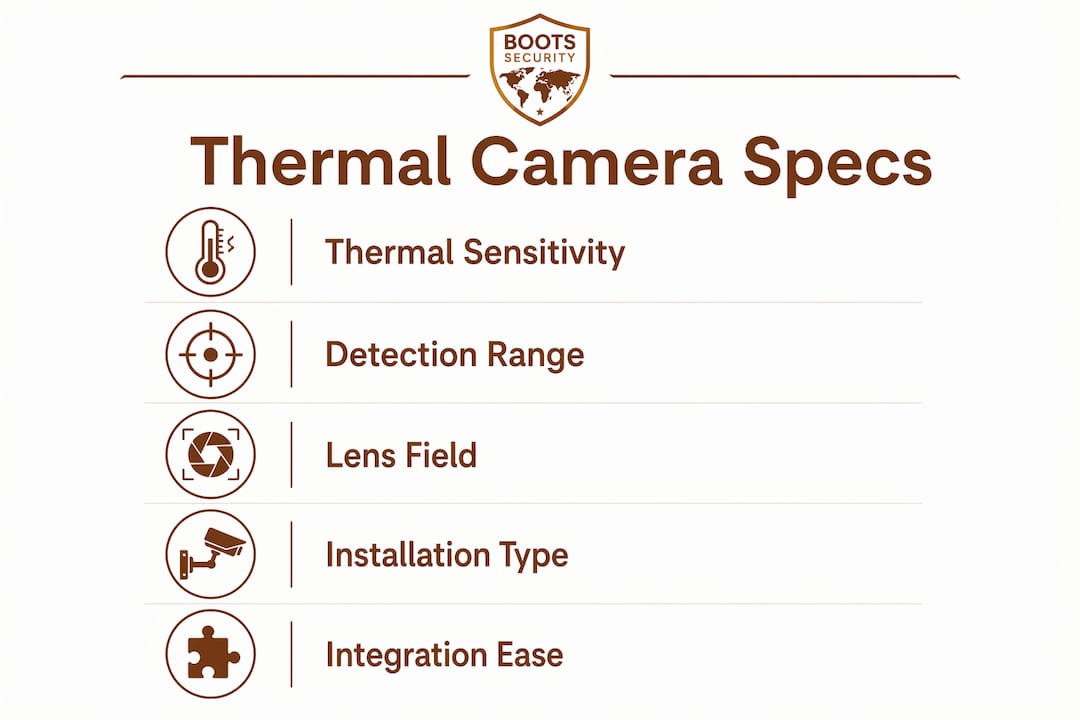
Detection range requirements drive lens selection. A narrow field-of-view lens extends range but reduces coverage width. A wide field-of-view lens covers more area but reduces the distance at which a person can be reliably detected. Most perimeter deployments use a combination of both.
Matching camera type to use case
| Use case | Recommended type | Key priority |
|---|---|---|
| Large perimeter security | Long-range thermal unit | Detection range, low mK |
| Industrial heat monitoring | Fixed thermal with analytics | Temperature alarm thresholds |
| Entry point surveillance | Hybrid thermal and visible unit | Dual-sensor identification |
| Portable site inspection | Handheld thermal imager | Portability, battery life |
Hybrid systems that combine a thermal sensor with a visible-light sensor in one housing are the most practical choice for entry points and chokepoints. The thermal sensor handles detection in all conditions; the visible sensor captures detail when lighting permits.
Budget and installation considerations
Installation costs for wireless thermal cameras are lower than wired systems, but wireless units introduce latency and bandwidth considerations that matter in high-security environments. Wired installations remain the standard for critical infrastructure. Factor in mounting hardware, conduit, and network infrastructure when building a total project budget.
How to integrate thermal cameras into an existing security system
Effective integration follows a detection-to-identification workflow. Thermal cameras serve primarily in the detection phase, triggering alerts that prompt review by high-resolution visible-light cameras. That workflow requires deliberate system design.
- Map your detection zones first. Identify the perimeter segments, access points, and blind spots where thermal detection adds the most value. Thermal cameras work best in open areas with clear lines of sight.
- Pair thermal units with HD visible-light cameras. A multi-layered approach combining thermal and visible-light cameras achieves the best results. Position the visible-light camera to cover the same zone as the thermal unit so that any thermal alert immediately pulls up a visible-light feed.
- Configure heat-based alert rules. Set detection zones within the camera’s field of view and define alert thresholds based on heat signature size and movement. This configuration reduces nuisance alerts from animals or environmental heat sources.
- Connect to your alarm response workflow. Thermal alerts should feed directly into your alarm response system, triggering a verified response rather than an automatic dispatch. Verification cuts unnecessary guard deployments significantly.
- Test in adverse conditions. Commission the system during fog, rain, and darkness before signing off on the installation. Thermal cameras should perform consistently across all conditions. Any degradation in those scenarios points to a mounting or configuration problem, not a hardware failure.
Industries that benefit most from this integrated approach include manufacturing plants, cold storage facilities, utility substations, and large construction sites. Each of these environments combines high-value assets, large perimeters, and conditions that defeat standard cameras regularly.
Key Takeaways
Thermal cameras deliver superior perimeter detection by reading heat rather than light, making them the most reliable option for 24/7 surveillance in challenging environments.
| Point | Details |
|---|---|
| Detection range advantage | Thermal cameras detect humans at 200–500 meters versus 50 meters for visible-light cameras. |
| False alarm reduction | Heat-based detection eliminates triggers from shadows, trees, and lighting changes. |
| Identification limitation | Thermal units detect presence only; pair with HD visible-light cameras for identification. |
| Thermal sensitivity priority | Choose cameras with mK values below 35mK for reliable real-world detection performance. |
| Integration is mandatory | Thermal cameras work as a detection layer, not a complete standalone security system. |
Why I think most businesses underestimate thermal cameras
Security professionals often treat thermal cameras as a premium add-on for edge cases. That framing is wrong, and it costs clients real money.
The environments where thermal cameras matter most are not rare. Fog rolls into Ontario industrial sites regularly from october through april. Construction yards operate in total darkness for half the year. Warehouses with high-value inventory sit on large, poorly lit perimeters that a handful of standard cameras cannot adequately cover. These are not edge cases. They are the baseline operating conditions for a significant portion of Ontario’s commercial and industrial sector.
The mistake I see most often is buying thermal cameras based on resolution specs rather than thermal sensitivity. A camera with a sharp image but a high mK value will miss detections that a lower-resolution, lower-mK unit catches reliably. Resolution sells. Sensitivity protects.
The other common error is deploying thermal cameras without a verified alarm response workflow. A thermal alert that goes to an unmonitored inbox is worthless. The technology only delivers value when it connects to a response chain that acts on the detection within minutes. That means integrating thermal alerts with a professional alarm response protocol, not just recording footage for review the next morning.
Thermal imaging is not the future of security. It is the present, and the businesses that treat it as optional are accepting gaps in their surveillance that determined intruders will eventually find.
— Lakhwinder
Bootssecurity’s approach to thermal camera integration in Ontario
Bootssecurity brings together advanced surveillance technology and licensed guard services for Ontario businesses that need more than a camera system.

Bootssecurity’s surveillance programs pair thermal detection with HD visible-light cameras and connect alerts directly to a verified alarm response workflow. Guards can reach a site within 4 hours of a confirmed threat, which means thermal detection translates into a real physical response, not just a recorded event. Whether you are protecting a construction site, a manufacturing facility, or a commercial property, Bootssecurity builds a surveillance layer that matches your environment and budget. Visit Bootssecurity’s security services to see the full range of options, or request a quote to start a conversation about your specific site.
FAQ
What is the detection range of a thermal security camera?
Thermal cameras detect humans at 200–500 meters, compared to roughly 50 meters for standard visible-light cameras. The exact range depends on lens selection and the camera’s thermal sensitivity rating.
Can thermal cameras work in complete darkness?
Yes. Thermal cameras operate in total darkness because they detect heat emitted by objects rather than reflected light. No external illumination is required.
Do thermal cameras replace standard CCTV?
No. Thermal cameras should complement, not replace, visible-light cameras. Use the thermal unit for detection and the visible-light camera for identification and evidence capture.
How much do professional thermal security cameras cost?
Professional thermal cameras start around $2,000, while hybrid thermal and visible-light units for smaller operations range from $400 to $1,500. Total project cost includes installation, networking, and integration with existing systems.
What is thermal sensitivity and why does it matter?
Thermal sensitivity, measured in millikelvin (mK), defines the smallest temperature difference the camera can detect. Lower mK values below 35mK produce more reliable detection in real-world conditions where a person’s heat signature may closely match the background temperature.


